
Valeo Power France, La Verrière, France
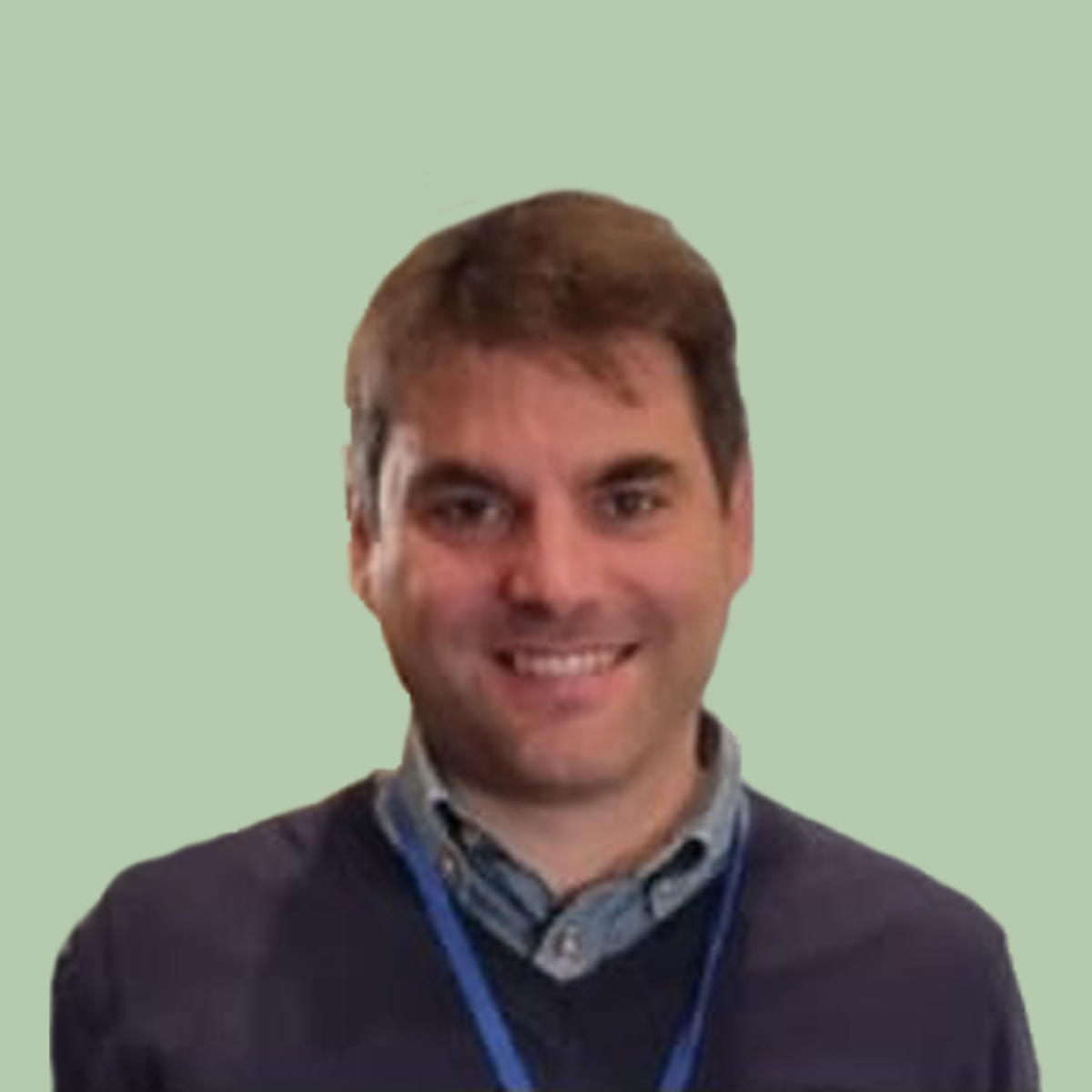
Marco Bonato
Biography
Marco Bonato is Reliability Manager and Reliability Senior Expert in Valeo Power Division. His responsibility includes the management and expertise development of the three branches of reliability engineering: operational, experimental and predictive. Marco holds a Ph.D. in Physical Chemistry from the University of Bristol (UK). Prior to this, he obtained a Master degree in Inorganic Chemistry at the University of Padua (Italy).
Conferences
Room |
Date |
Hour |
Subject |
|---|---|---|---|
| Room 10 |
19-11-2025 |
5:00 pm – 5:30 pm |
64 Fatigue Simulations in Automotive Components: the importance of representative validation tests. |
| Room 10 |
20-11-2025 |
10:45 am – 11:15 am |
87 Probabilistic Fatigue Approach for Complex Vibration Signals. Case Study of Automotive components. |
Conferences Details
64 Fatigue Simulations in Automotive Components: the importance of representative validation tests.
Vibration qualification testing is crucial for automotive manufacturers and suppliers to ensure vehicle reliability. Automotive specifications are designed to rigorously assess component durability against operational stressors, including vibration-induced fatigue, shock loads from impacts, and general wear-out phenomena. Component qualification typically involves pass/fail testing to verify adherence to customer requirements. Validation of new or redesigned components utilizes both physical bench tests and structural simulations. Simulation, particularly Finite Element Analysis (FEA), has become integral to the design validation process. FEA not only informs the necessity of physical prototype testing (e.g. shaker tests) but also enables design optimization for enhanced durability and performance prediction. This paper illustrates a study-case where FEA simulations, carried out during the design validation of a mechatronic component (an electric driven compressor, eDC) were not able to identify the weakness of the initial design, resulting in vibration failure during the final vehicle proving ground test. Measurements on the vehicle showed that the initial validation signal provided for FEA (a sinusoidal vibration at fixed frequency) failed to represent the in-service vibration stress loads on the eDC, which are random in nature. After an initial description of the issues encountered, the paper will develop the state of the art methods and tools that should be used in order to develop representative vibration tests. The approach, known as “test tailoring method”, offers the advantage of truly representing the vibration damage content the components is experienced in the lifetime, but in an accelerated manner. Additional considerations will interest an in-house software solution that performs quick comparative analysis of vibrations signals, the importance of the vibration mission profiling, and the development of specifications based on physics-of-failure criteria. By focussing on vibration, the study highlights the importance of validating the design (both on simulation and accelerated bench tests) by the means of representative tests, which need to be correlated to the real in-service stress environment that is affecting the durability of the component.
87 Probabilistic Fatigue Approach for Complex Vibration Signals. Case Study of Automotive components.
Structural simulation is gaining momentum in the automotive industry, offering the potential to validate new component designs without lengthy and costly physical prototyping. Finite Element Analysis (FEA) techniques are powerful to simulate local stress concentrations and identify weak zones – areas prone to cumulative fatigue damage and failure. In the recent years, there have been numerous investigations concerning FEA simulations providing not only the stress level but also the quantification of local fatigue damage accumulation, allowing for the estimation of component durability and time to failure. Additional methods have been developed in order to overcome the limitations of “deterministic” approaches, by considering the variability associated with fatigue simulation results, by introducing the concept of “Probabilistic Fatigue”, also known as “Stochastic Fatigue”. In this paper, we investigate Stochastic Fatigue techniques applied to automotive components undergoing mechanical vibration tests. The study focus on the intrinsic challenges associated with a stochastic fatigue approach, i.e.: • the availability of the material characterization • the difficult of correlating the simulation models • the choice of the of input parameters to be considered for the Uncertainty Quantification (UQ) Proposed is a concrete case study based on the simulation of a supporting bracket with known geometrical variations. The geometry is designed in such a way that it allows to consider: • multiple degree-of-freedom systems • complex geometry that comes with various source of variability The fatigue damage of the part undergoing vibration stress from a complex vibration signal (a Swept-Sine-On-Random SSoR excitation) is initially stimulated via FEA and the fatigue life distribution determined by running multiple simulations by varying certain parameters (the geometry of the bracket, the strength coefficient, the Basquin fatigue exponent, the damping ratio and the surface roughness). Then, several specimens are vibrated until failure in a testing shaker, and the correlation results are discussed. By correlating the fatigue variability of FEA-based calculation, the aim of the study is to start from a relatively simple use case to further tackle the issues often encountered in automotive components, which have complex geometry, various resonances and are made from multiple components. The output of the study is to (1) identify the factors considered during stochastic fatigue simulations and (2) find the best way to correlate FEA results to real vibration tests. Indeed, given the constraints faced nowadays by the automotive industry, the ultimate goal is the scale-up of the method at industrial level for a routine faster validation (zero test mindset).